
WELSH CORGI CARDIGAN GENERAL INFORMATION
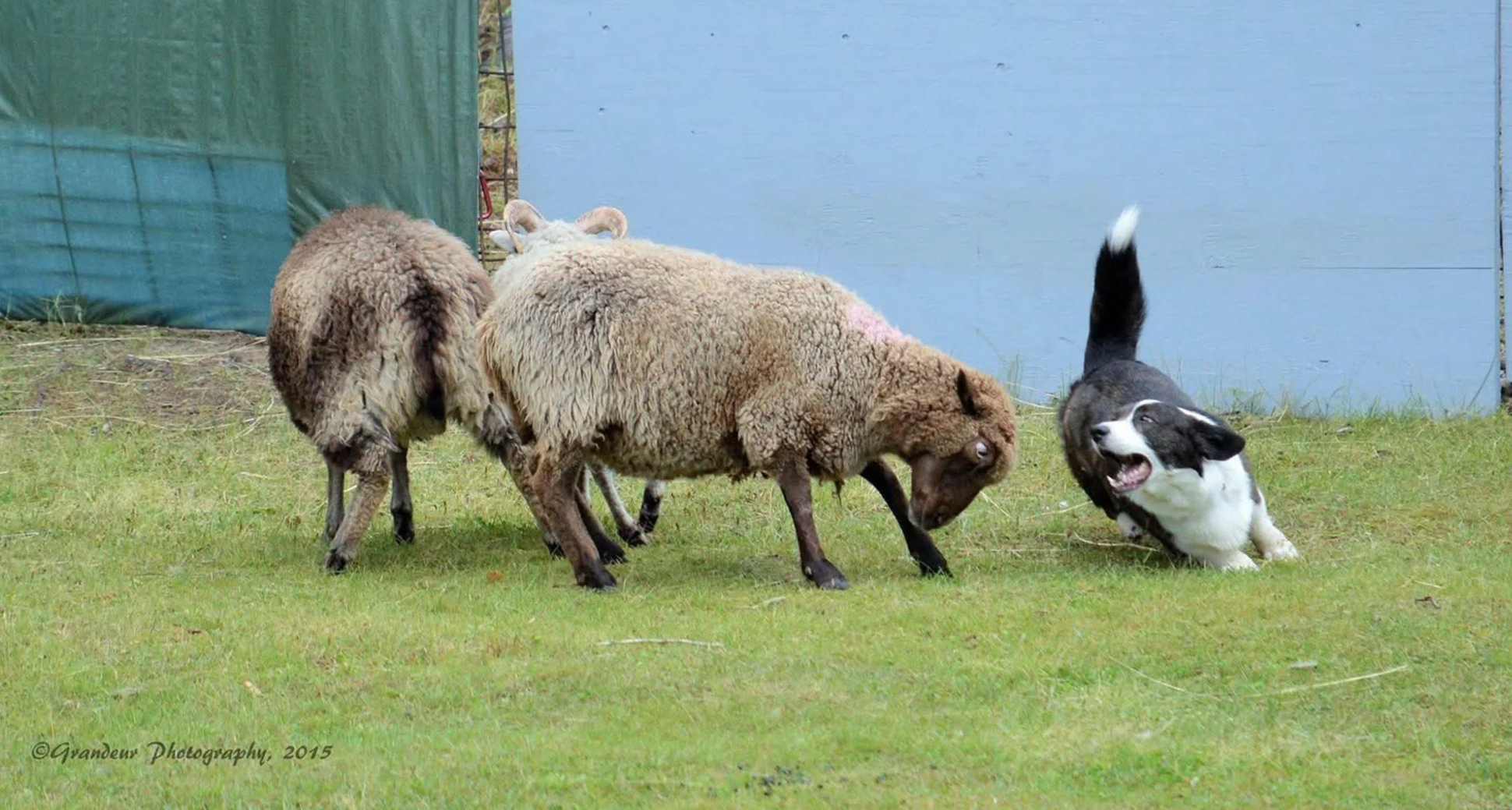
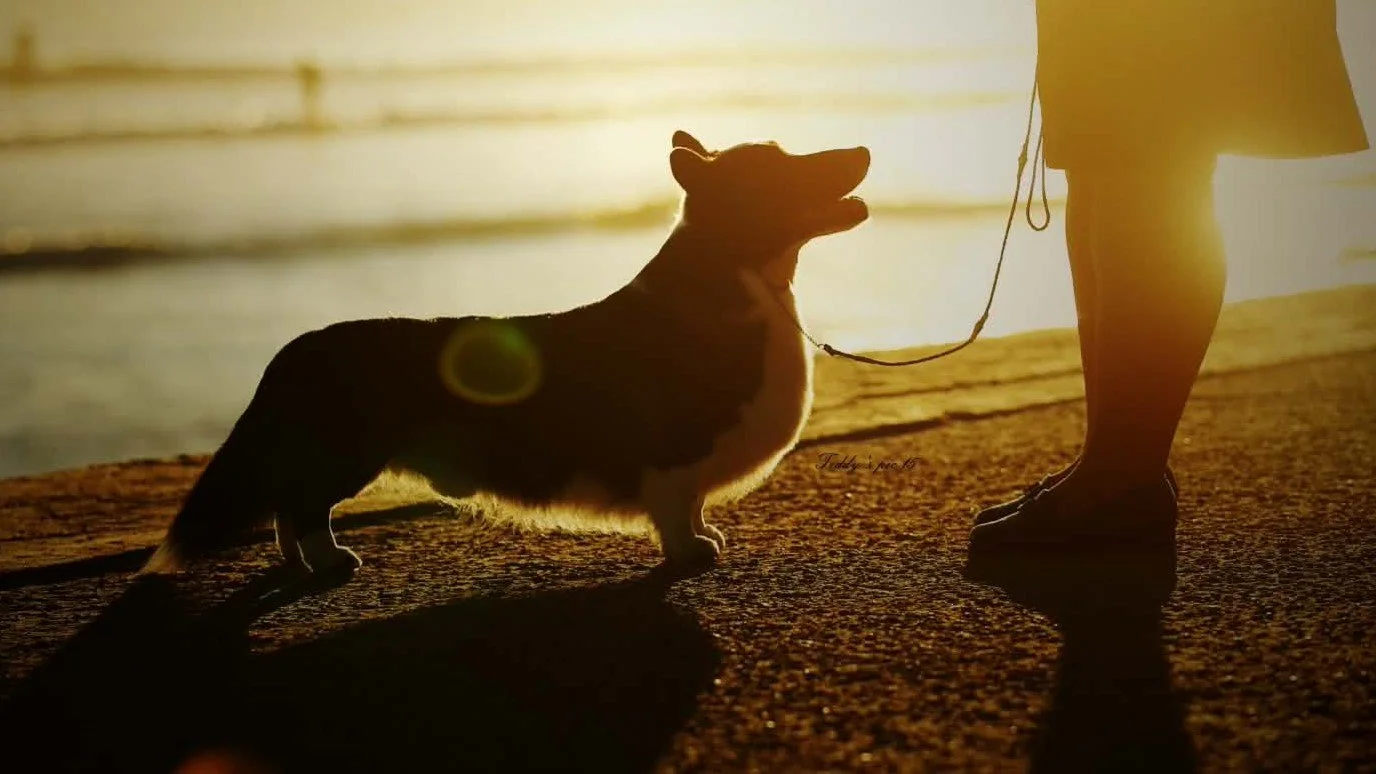
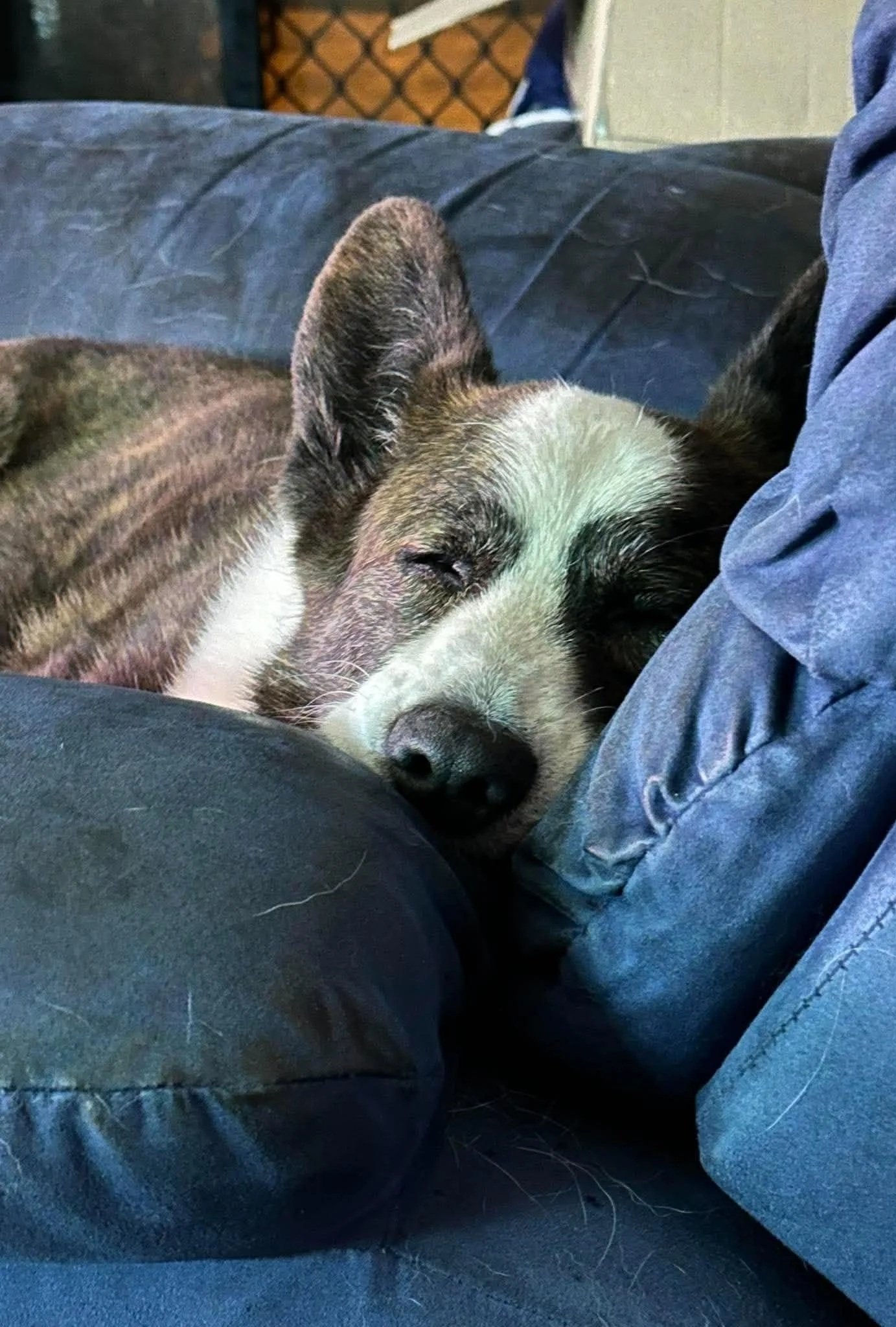
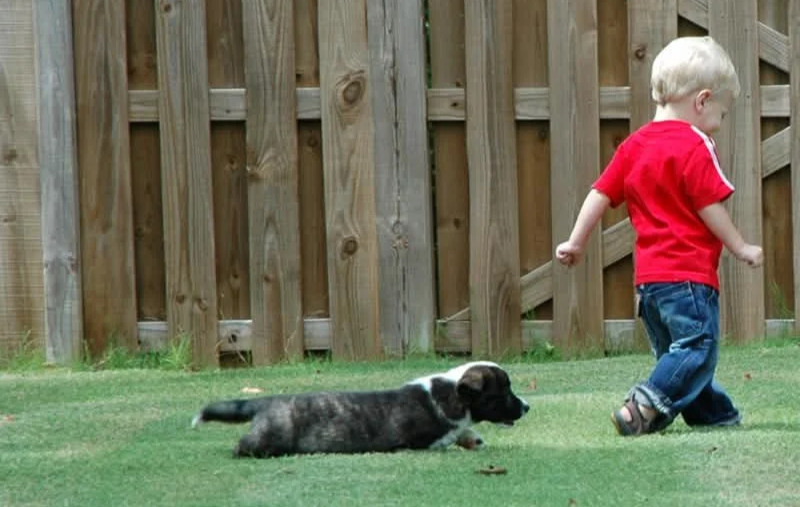
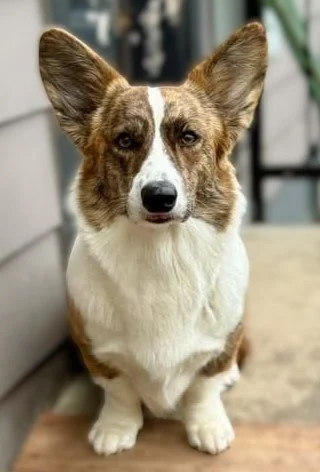
The Cardigan Welsh Corgi is a 3000 year old breed, the older of the two Corgi breeds. He was known as the yard long dog, recognising his longer body silhouette from his Teckel (Hound) heritage vs the Pembroke's squarer body and it's Spitz background. While both are herding breeds of primarily cattle, they are two different, distinct breeds. 'Corgi', (Dwarf dog in Welsh), is somewhat like saying 'Terrier'. Their low, but extremely agile build allowed them to drive cattle with barking, nipping heels, yet expertly avoid those cattle kicks, with the hoof going harmlessly over their heads. The dwarf aspect is an integral component of the breed's heritage which established him as economic worker, farm guard, rodent dispatcher and faithful companion in his country of origin. Today, he is a vulnerable breed in Wales, and the wider United Kingdom. We have a small population in Australia and while he is not as well known as his Pembroke cousin, he has a faithful following in those who love this breed. Most Cardigan Corgwn (plural of Corgi) don’t like being left alone and will follow you around on your daily activities. He'll know your routine better than you. They thrive on human interaction. Simply being with you is enough for this dog. He won't be happy left on his own always. Energy levels can vary widely. Some never tire, a few are happy lounge lizards and everything in between. A breeder who matches puppies to their most suitable homes is recommended. As a herding breed, he is not the breed for everyone. Cardis are generally a little more laid back than Pembrokes. They are even tempered, super loyal, affectionate and adaptable. Overall balance is more important than absolute size in Cardigans. Expect an average of 12-16kg, with some larger examples outside this range. You will find them in shades of sable (our reds), brindle (red, brown and black), Tri colour with red or brindle points (brindle points often appear to look black & white) and blue merle ( with red or brindle points), with or without white flashing on neck, chest, legs, muzzle and head.
Cardigans are a herding breed and the desire to do so will vary between individual dogs. They were bred to herd cattle. Unlike a Border Collie who herd sheep by eyeing and stalking, Corgis control a herd by chasing, biting and barking. This is instinctual and requires a level of intelligence. They are a highly intelligent and perceptive breed indeed. He is easy to train but also more than happy to assume the role of leader in less experienced hands. They are an alert and watchful guardian with a big dog bark. Cardigans are often very vocal with a repertoire of grumbles, mumbles & moans. They will let you know when something has changed or needs your attention. His job was to chase strays, foxes and guard the farm, so you will understand where this comes from.
The Magical Double Coat….Cardigan Corgis are a double coated breed – warm in winter, cool in summer. They always seem to look well groomed. They have a coat which can be muddy from outdoors, and on drying, the dirt will just fall out of their coat. The coat is truly a marvel to behold, but it comes at a price; shed hair, and lots of it. A daily brush (or at least weekly) and a good vacuum will be your friend. Consider a Cardigan a 'big dog' in a small package who make wonderful family companions.
WELSH CORGI CARDIGAN
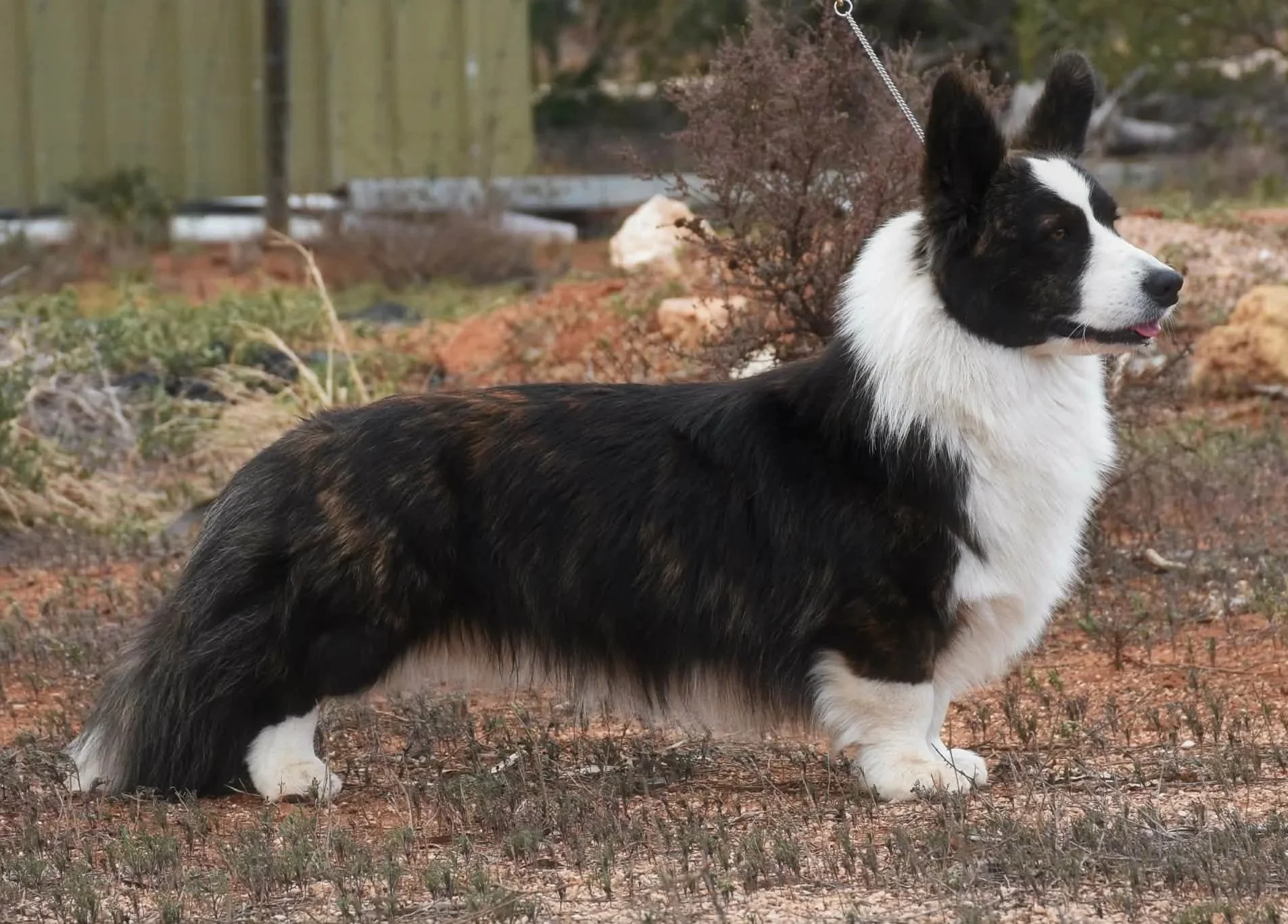
GENERAL APPEARANCE : Sturdy, tough, mobile, capable of endurance. Long in proportion to height, terminating in fox-like brush, set in line with body.
Breed Standard
CHARACTERISTICS : Alert, active and intelligent.
TEMPERAMENT : Alert, intelligent, steady, not shy or aggressive.
HEAD AND SKULL : Head foxy in shape and appearance, skull wide and flat between ears tapering towards eyes above which it is slightly domed. Moderate stop. Length of foreface in proportion to head 3 to 5, muzzle tapering moderately towards nose which projects slightly and in no sense blunt. Underjaw clean cut. Strong but without prominence. Nose black.
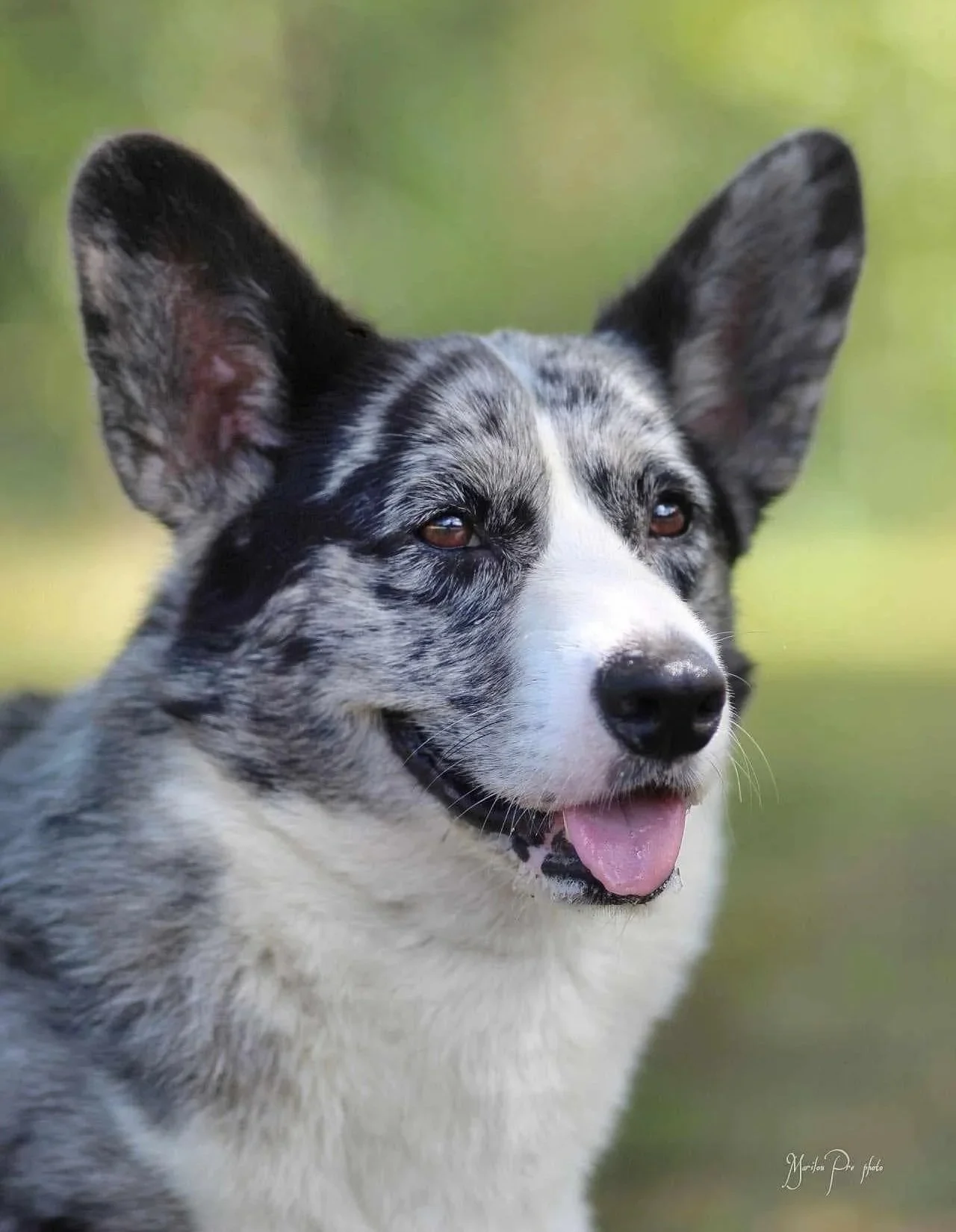
EYES : Medium size, clear, giving kindly, alert but watchful expression. Rather widely set with corners clearly defined. Preferably dark, or to blend with coat, rims dark. One or both eyes pale blue, blue or blue flecked, permissible only in blue merles.
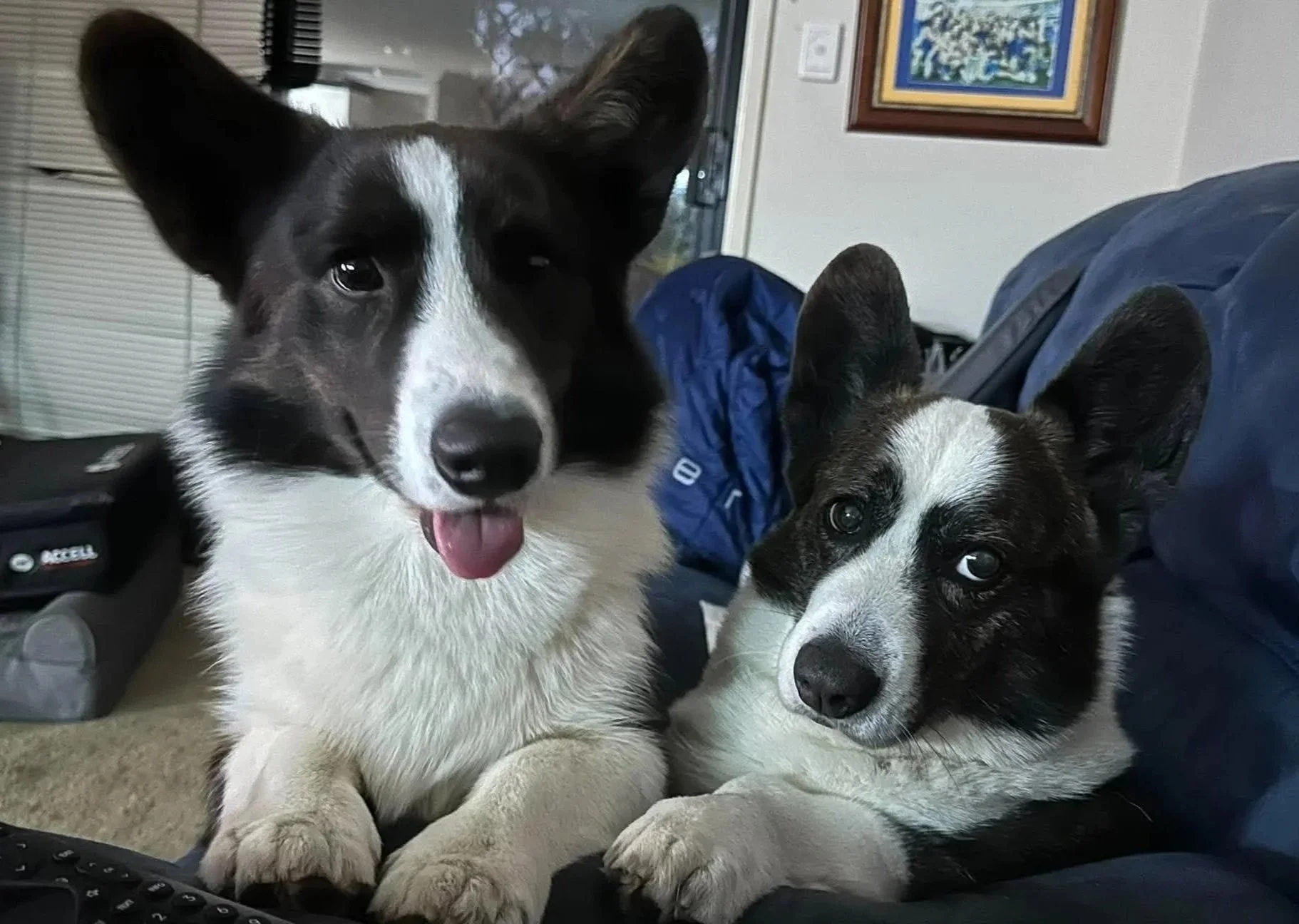
EARS : Erect, proportionately rather large to size of dog. Tips slightly rounded, moderately wide at base and set about 9 cms (3 &1/2; ins) apart. Carried so that tips are slightly wide of straight line drawn from tip of nose through centre of eyes, and set well back so that they can be laid flat along neck.
MOUTH : Teeth strong, with scissor bite, i.e. Upper teeth closely overlapping the lower teeth and set square to the jaws.
NECK : Muscular, well developed, in proportion to dog's build, fitting into well sloping shoulders.
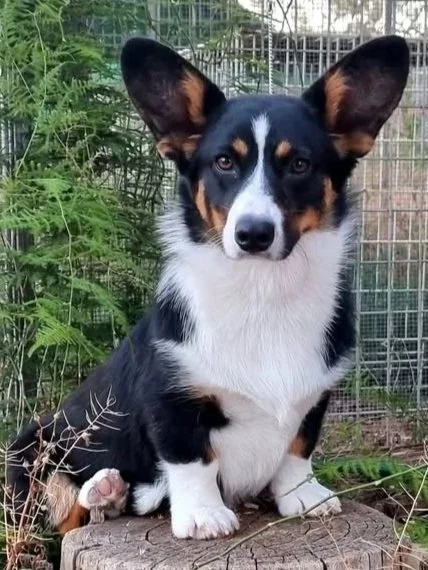
BODY : Chest moderately broad with prominent breast bone. Body fairly long and strong, with deep brisket, well sprung ribs, clearly defined waist. Topline level.
HINDQUARTERS : Strong, well angulated and aligned with muscular thighs and second thighs, strong bone carried down to feet, legs short; when standing, hocks vertical, viewed from side and rear.
FEET : Round, tight, rather large and well padded.
FOREQUARTERS : Shoulders well laid, angulated at approximately 90 degrees to upper arm; muscular, elbows close to sides. Strong bone carried down to feet. Legs short but body well clear of the ground, forearms slightly bowed to mould round the chest. Feet turned slightly outwards.
TAIL : Like a fox's brush set in line with the body and moderately long (to touch or nearly touch ground). Carried low when standing but may be lifted a little above body when moving, not curled over back.
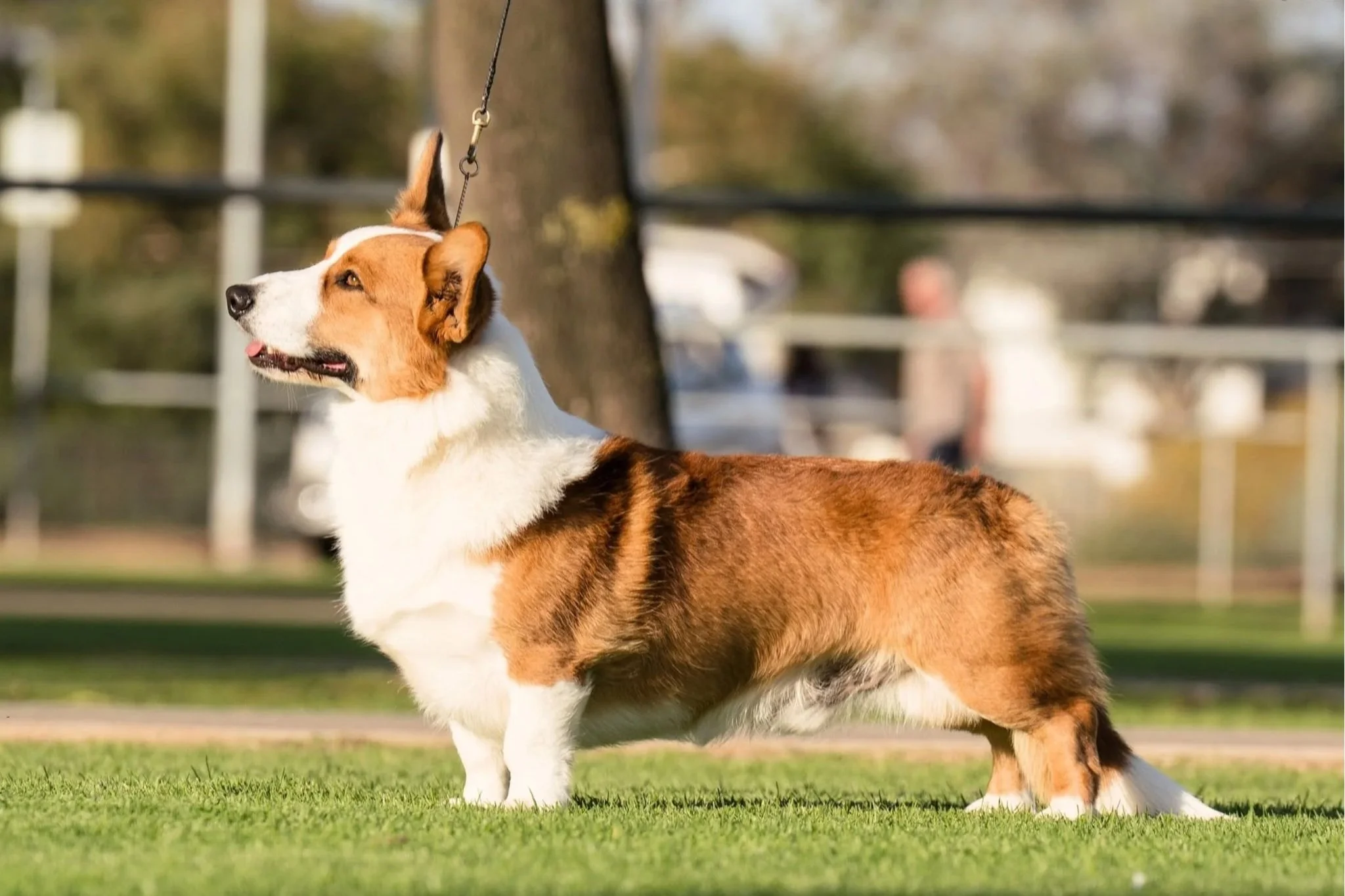
COAT : Short or medium of hard texture. Weatherproof, with good undercoat. Preferably straight.
COLOUR : Acceptable colours are blue merle, brindle, red, sable, tri colour with brindle points and tri colour with red points.
All of the above with or without the typical white markings on head, neck, chest, underparts, legs and feet, white tail tip. White should not predominate on body or head where it should never surround the eyes. Nose and eye rims must be black. Liver and dilute colours highly undesirable.
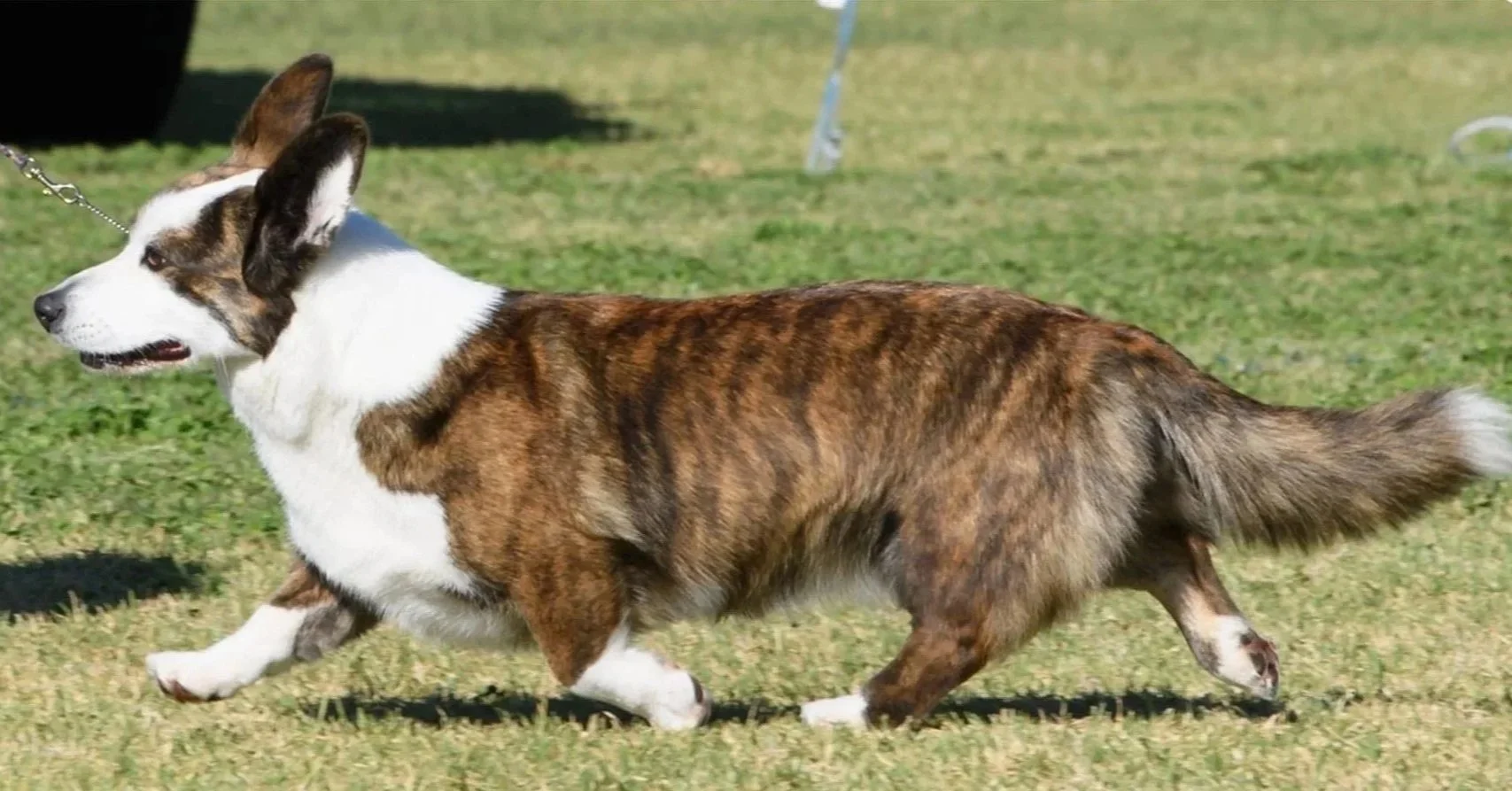
GAIT/MOVEMENT : Free and active, elbows fitting close to sides, neither loose nor tied. Forelegs reaching well forward without too much lift, in unison with thrusting action of hindlegs.
SIZES : Ideal Height: 30 cms (12 ins) at shoulders.
Weight in proportion to size with overall balance the prime consideration.
FAULTS : Any departure from the foregoing points should be considered a fault and the seriousness with which the fault should be regarded should be in exact proportion to its degree and its effect upon the health and welfare of the dog.
NOTES : Male animals should have two apparently normal testicles fully descended into the scrotum.
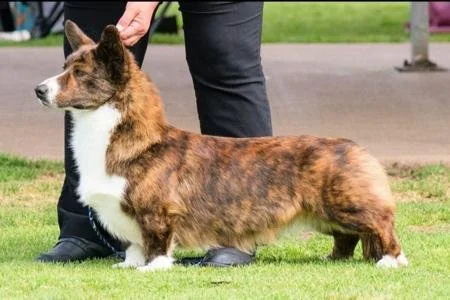
CARDIGAN COLOURS
Brindle
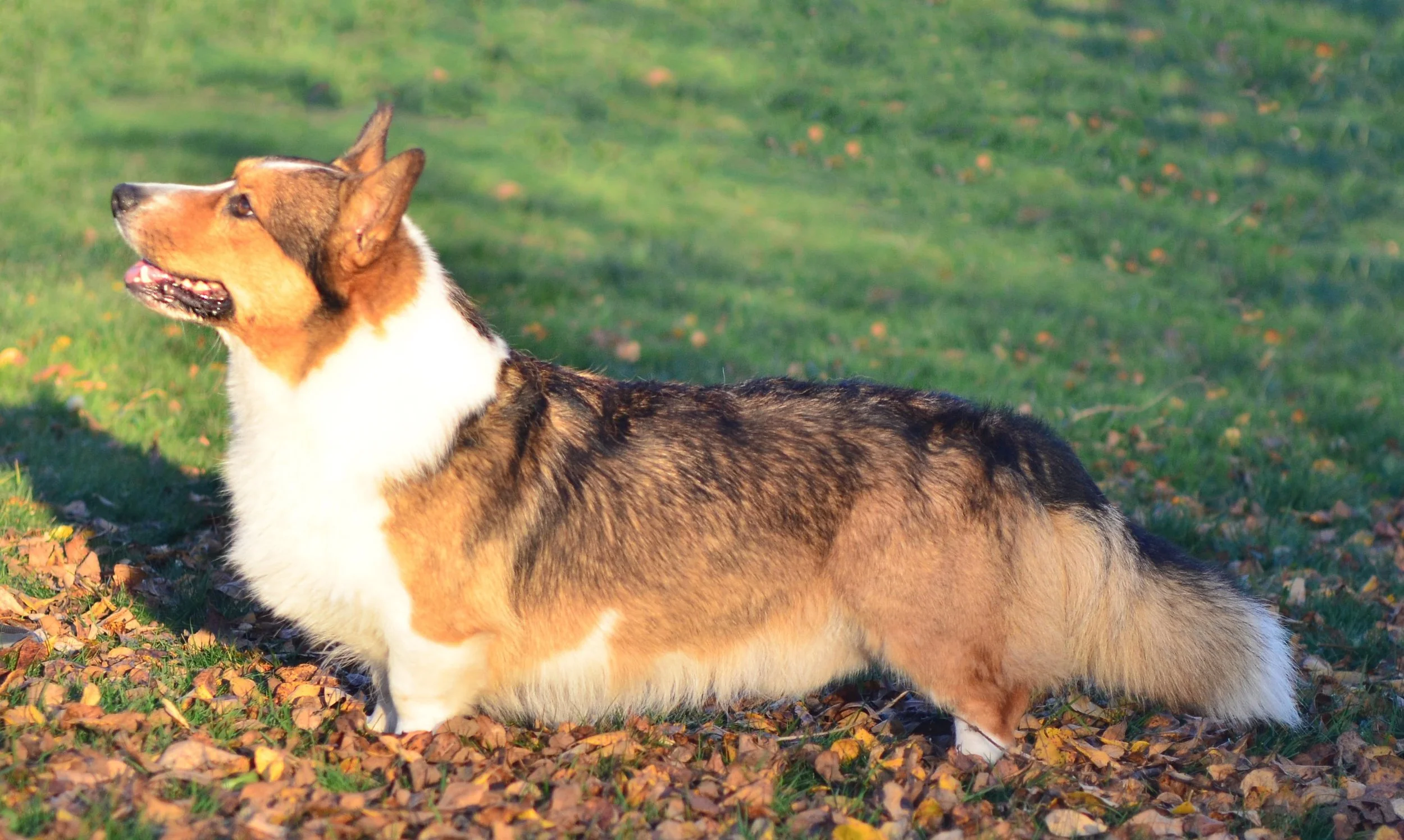
Sable
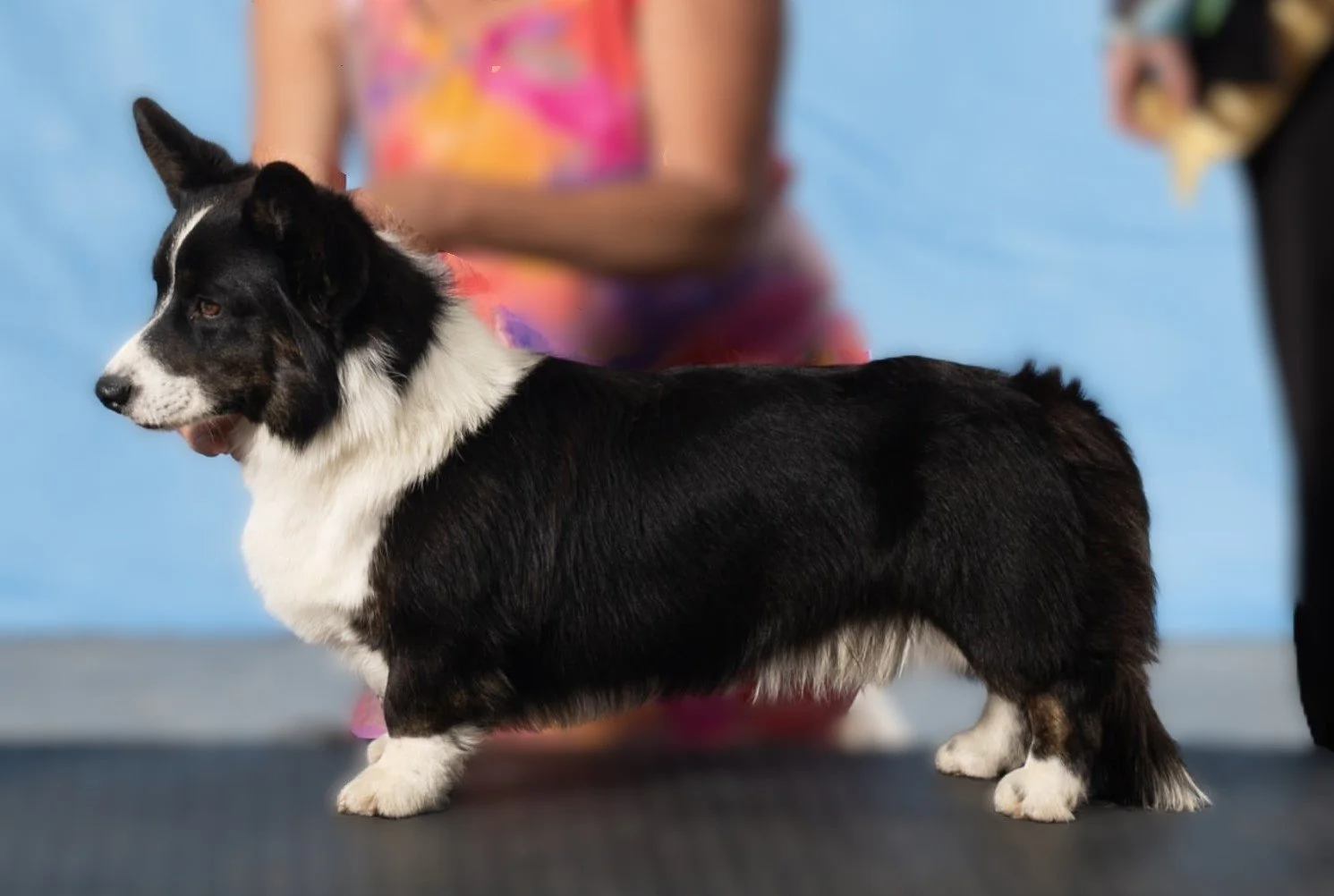
Tri Colour brindle points
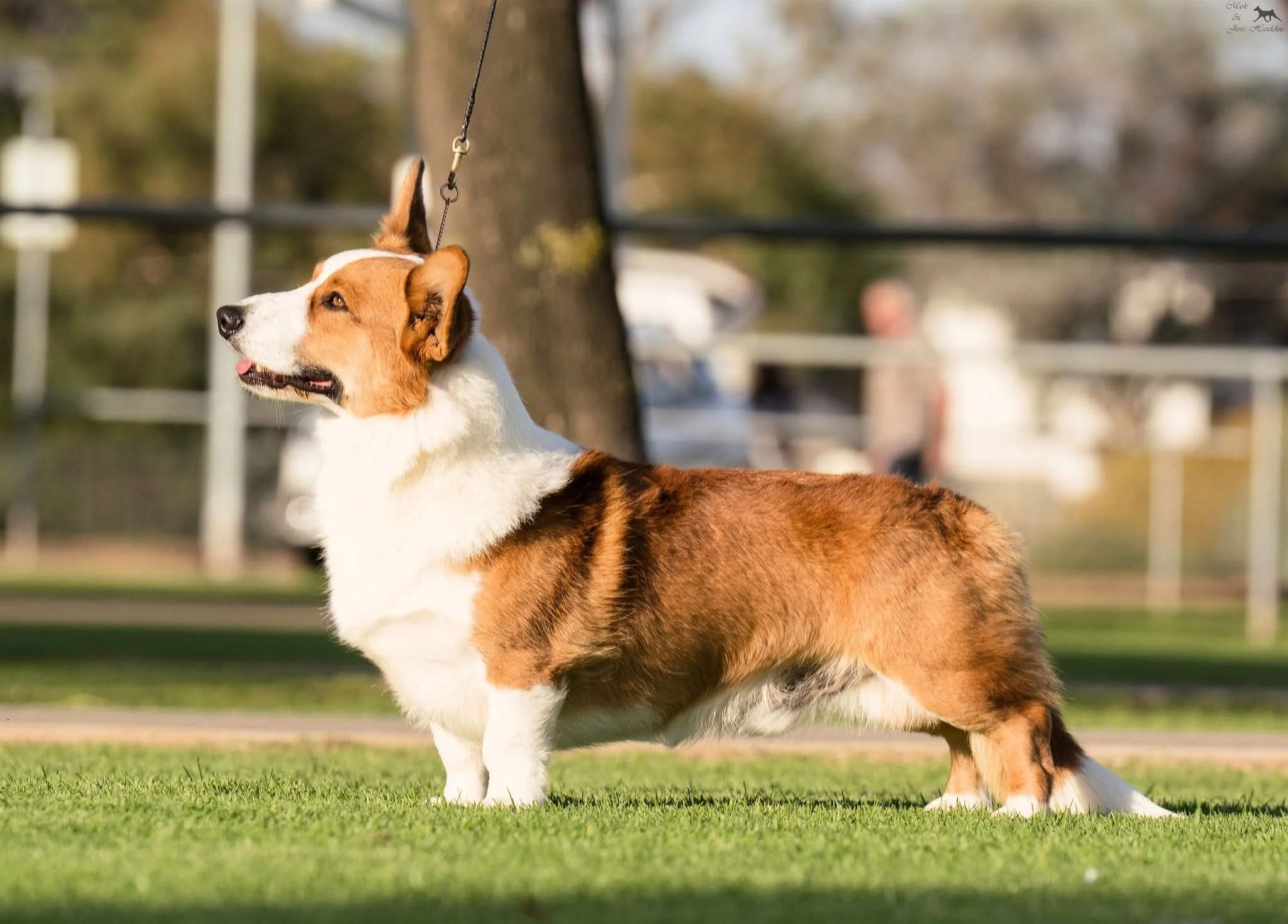
Red
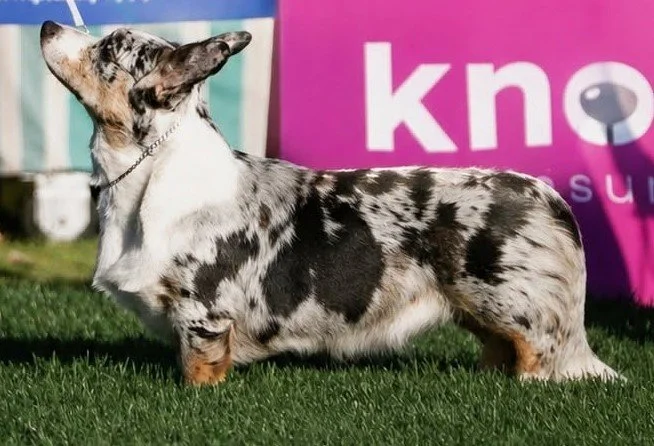
Merle
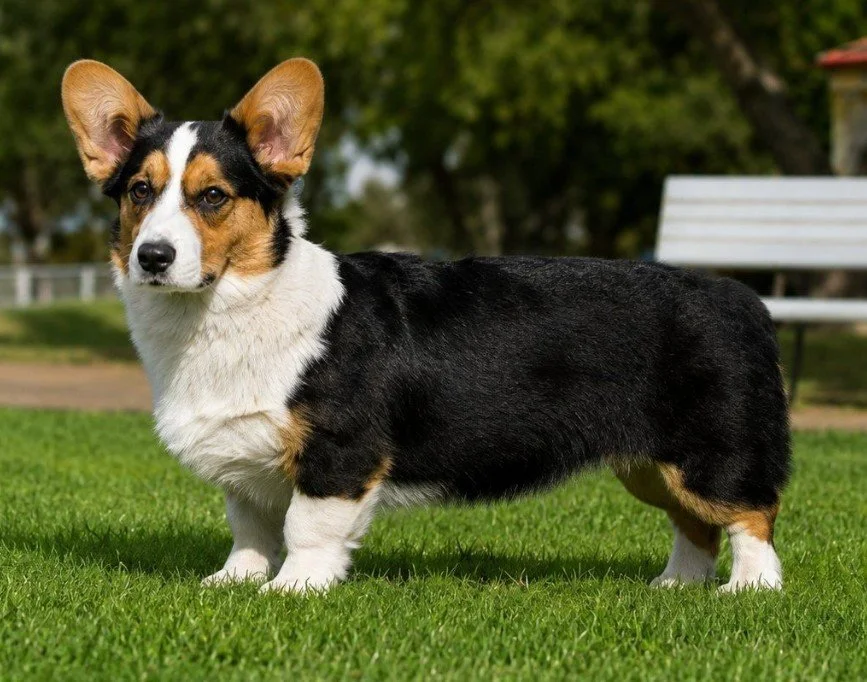
Tri Colour red points